


News

Trinidad and Tobago Hosts First Private Sector Workshop on ASYHUB
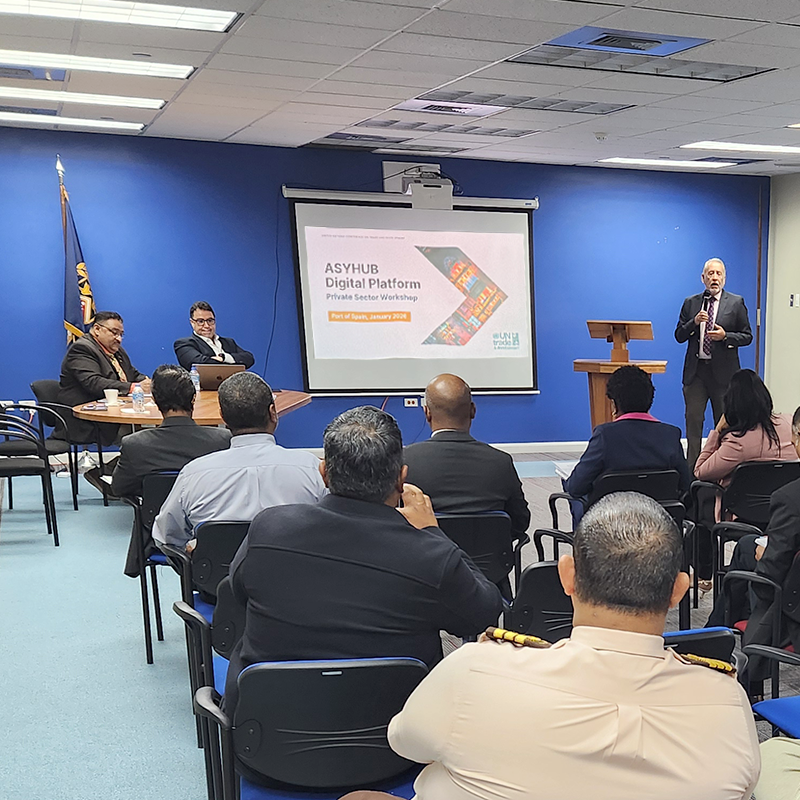
PORT OF SPAIN, January 22, 2026: A private sector workshop was held in Port of Spain to present the ASYHUB digital platform and engage key trade stakeholders in Trinidad and Tobago under the ASYCUDA Programme. The session marked the first-ever structured engagement with the private sector on ASYHUB in the country, supporting closer collaboration on digital trade facilitation.
Representatives from private sector institutions, including trade and shipping stakeholders, participated in a dedicated two-hour session focused on the role of ASYHUB in strengthening trade facilitation, improving transparency, and enhancing coordination between customs administrations and external actors.
Discussions were framed against the backdrop of persistent operational challenges affecting trade, including fragmented data flows, limited interoperability between systems, and the need to align procedures with international standards. In this context, the workshop provided an opportunity to present ASYHUB as an open, standardized data exchange and processing platform designed to facilitate seamless integration between customs systems and other external platforms and data providers.
The presentation highlighted ASYHUB’s core characteristics, including its cloud-native architecture, reliance on open-source technologies, and full integration with ASYCUDAWorld. The workshop placed particular emphasis on the three functional modules of ASYHUB: Maritime, Express, and Postal.Participants were introduced to key functional features such as single submission and data reuse, interoperability based on international standards, and secure data-sharing mechanisms that ensure confidentiality while providing real-time visibility to authorized users. Particular attention was given to ASYHUB’s capacity to support pre-arrival and pre-departure processing for maritime, express, and postal consignments.
The workshop also explored the modular structure of ASYHUB, with a focus on maritime core functions such as advanced port call management, electronic submission of IMO FAL forms, comprehensive vessel and cargo management, and integrated risk management. Presentations outlined how these functionalities can contribute to more predictable clearance processes, improved data quality, and enhanced coordination among border agencies and private operators.
In addition, participants were briefed on ASYHUB solutions for express and postal consignments, including the categorization of goods, automated and immediate release mechanisms for low-risk consignments, and the exchange of electronic advance data to support efficient customs clearance in the context of cross-border e-commerce. Implementation experiences from other regions were shared to illustrate efficiency gains, scalability, and adaptability across different operational environments.
The session concluded with an overview of the proposed roadmap for ASYHUB implementation, emphasizing a phased and inclusive approach, supported by capacity-building activities and targeted training for customs officers, shipping agents, and private operators. Exchanges with participants underscored the value of early private sector engagement in shaping digital solutions that respond to operational realities while supporting national trade facilitation objectives.
This first private sector workshop on ASYHUB in Trinidad and Tobago represented an important step toward strengthening public–private dialogue and laid the groundwork for continued collaboration as the project moves forward.

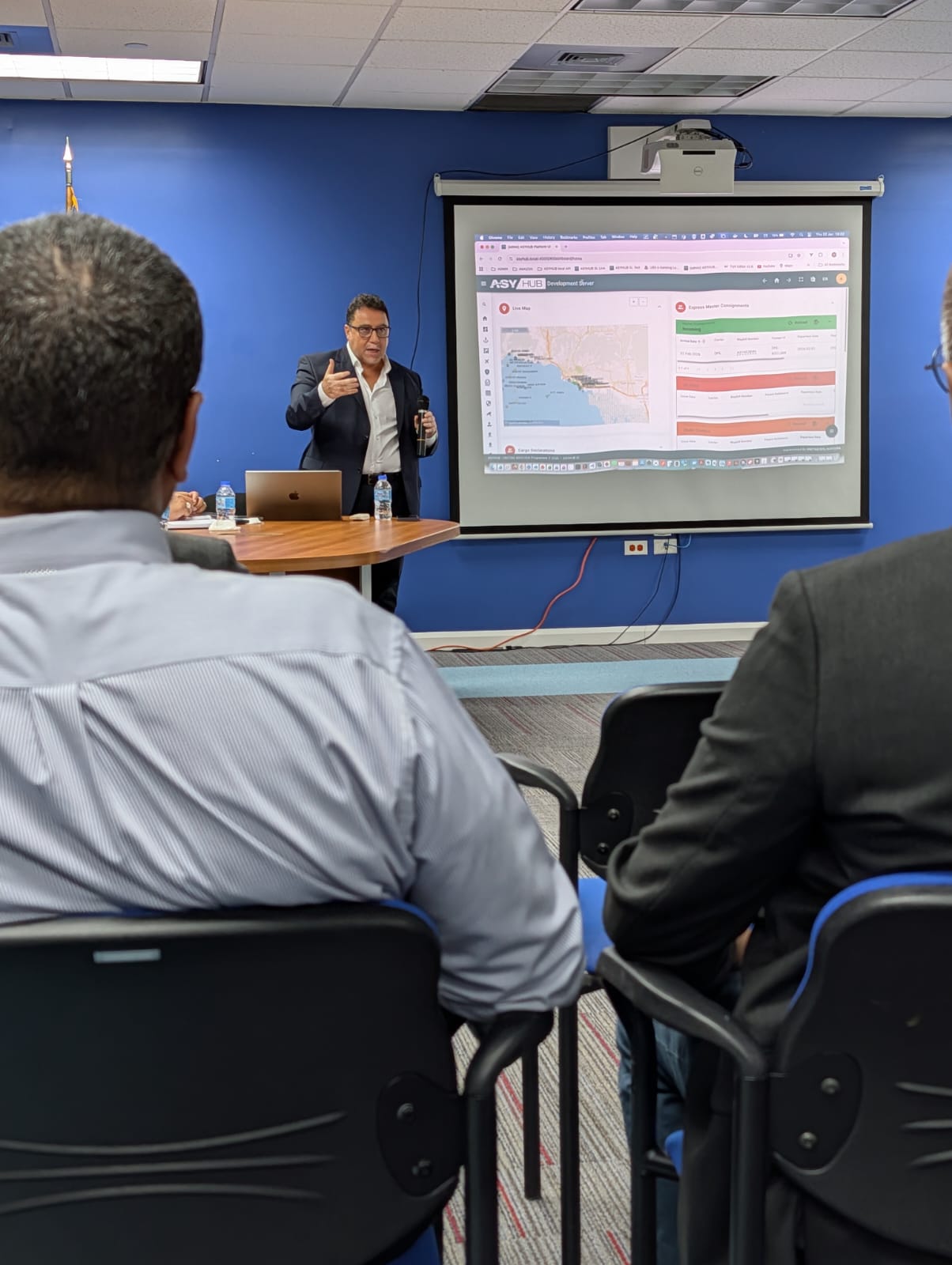
PORT OF SPAIN, January 22, 2026: A private sector workshop was held in Port of Spain to present the ASYHUB digital platform and engage key trade stakeholders in Trinidad and Tobago under the ASYCUDA Programme. The session marked the first-ever structured engagement with the private sector on ASYHUB in the country, supporting closer collaboration on digital trade facilitation.
Representatives from private sector institutions, including trade and shipping stakeholders, participated in a dedicated two-hour session focused on the role of ASYHUB in strengthening trade facilitation, improving transparency, and enhancing coordination between customs administrations and external actors.
Discussions were framed against the backdrop of persistent operational challenges affecting trade, including fragmented data flows, limited interoperability between systems, and the need to align procedures with international standards. In this context, the workshop provided an opportunity to present ASYHUB as an open, standardized data exchange and processing platform designed to facilitate seamless integration between customs systems and other external platforms and data providers.
The presentation highlighted ASYHUB’s core characteristics, including its cloud-native architecture, reliance on open-source technologies, and full integration with ASYCUDAWorld. The workshop placed particular emphasis on the three functional modules of ASYHUB: Maritime, Express, and Postal.Participants were introduced to key functional features such as single submission and data reuse, interoperability based on international standards, and secure data-sharing mechanisms that ensure confidentiality while providing real-time visibility to authorized users. Particular attention was given to ASYHUB’s capacity to support pre-arrival and pre-departure processing for maritime, express, and postal consignments.
The workshop also explored the modular structure of ASYHUB, with a focus on maritime core functions such as advanced port call management, electronic submission of IMO FAL forms, comprehensive vessel and cargo management, and integrated risk management. Presentations outlined how these functionalities can contribute to more predictable clearance processes, improved data quality, and enhanced coordination among border agencies and private operators.
In addition, participants were briefed on ASYHUB solutions for express and postal consignments, including the categorization of goods, automated and immediate release mechanisms for low-risk consignments, and the exchange of electronic advance data to support efficient customs clearance in the context of cross-border e-commerce. Implementation experiences from other regions were shared to illustrate efficiency gains, scalability, and adaptability across different operational environments.
The session concluded with an overview of the proposed roadmap for ASYHUB implementation, emphasizing a phased and inclusive approach, supported by capacity-building activities and targeted training for customs officers, shipping agents, and private operators. Exchanges with participants underscored the value of early private sector engagement in shaping digital solutions that respond to operational realities while supporting national trade facilitation objectives.
This first private sector workshop on ASYHUB in Trinidad and Tobago represented an important step toward strengthening public–private dialogue and laid the groundwork for continued collaboration as the project moves forward.