


News

ASYHUB Maritime Presented as Maritime Single Window at UN Trade and Development’s 12th Expert Meeting on Transport and Trade Logistics
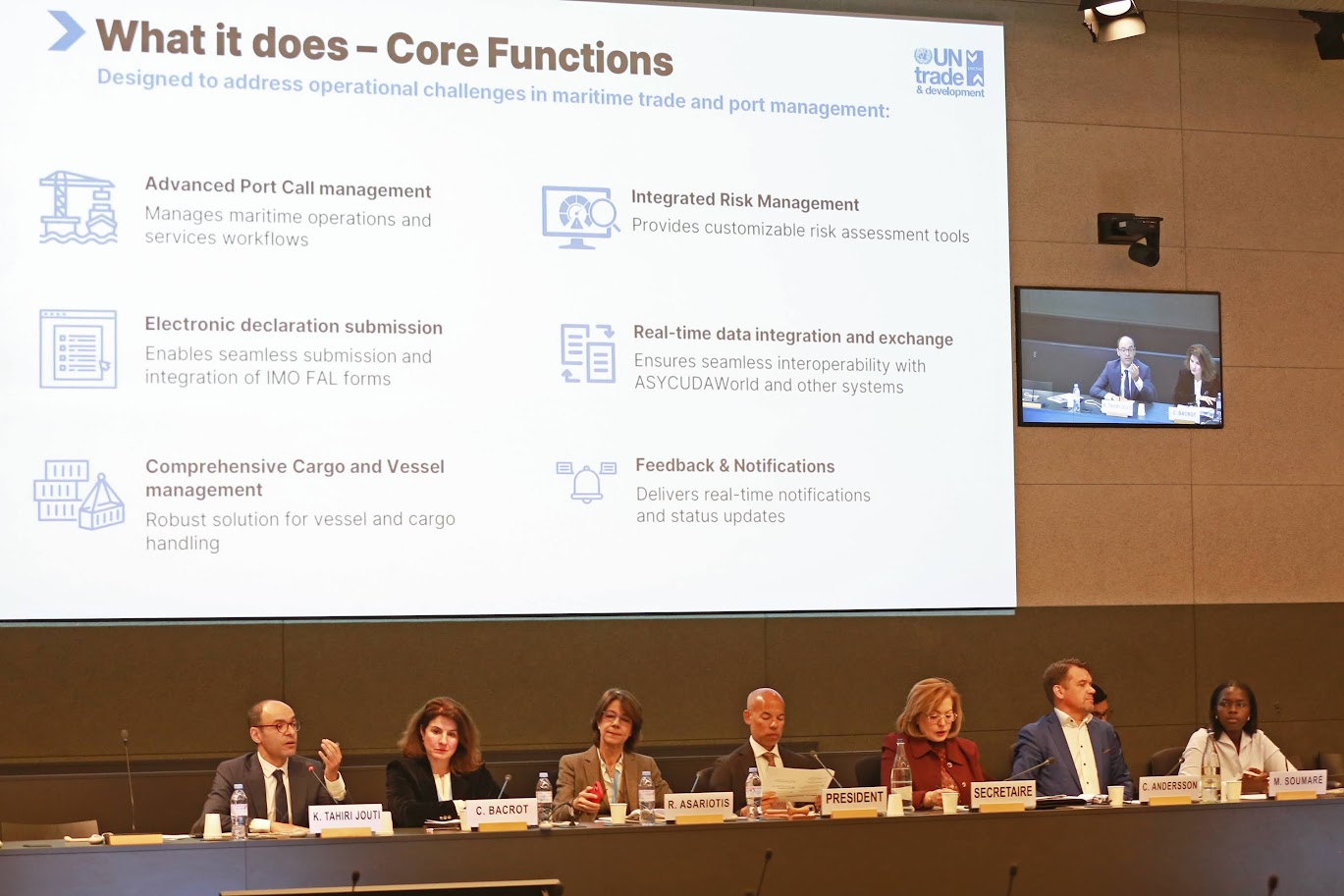
Geneva, 14 April 2026: The twelfth session of UN Trade and Development’s multi-year expert meeting on transport, trade logistics and trade facilitation brought together policymakers, international organizations and private sector stakeholders this week at the Palais des Nations to discuss pathways for strengthening resilience and sustainability in global trade. The session was moderated by the Ambassador of the Dominican Republic and featured contributions from UN Trade and Development’s Trade Facilitation Section, the ASYCUDA Programme, the International Labour Organization, the United Nations Commission on International Trade Law, the Global Alliance for Trade Facilitation, and the private sector, including A.P. Møller–Maersk (MAERSK), reflecting a broad, multi-stakeholder dialogue.
Against this backdrop, the ASYCUDA Programme presented ASYHUB Maritime, highlighting its potential use as a Maritime Single Window to support more efficient and coordinated port operations. The discussion emphasized the critical role of digitalization in addressing persistent inefficiencies in maritime trade, including fragmented reporting systems, duplication of procedures and limited inter-agency coordination. Contributions from UNCTAD’Trade Facilitation Section highlighted how trade facilitation measures, supported by digital infrastructure such as trade and maritime single windows, play a pivotal role in improving port performance, enhancing connectivity and strengthening collaboration across border agencies.
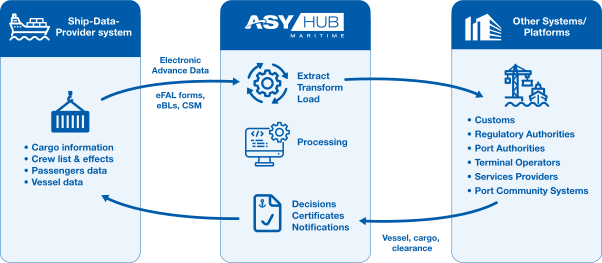
ASYHUB Maritime was introduced as a single-entry digital platform for ship reporting formalities, enabling standardized data exchange between customs, port authorities, immigration services and other stakeholders. It is a system that users can securely access and log in to, while also serving as a cutting-edge interface for trade data exchange and centralization. Built on interoperable, standards-based technologies, the platform facilitates the extraction and processing of data from multiple sources, including shipping lines, logistics providers and freight forwarders, transforming often fragmented and duplicated information into actionable data. By supporting real-time information sharing across the maritime ecosystem, the platform contributes to faster vessel clearance, improved risk management and greater transparency.
The presentation also highlighted that ASYHUB Maritime is the result of a unique tripartite collaboration between UNCTAD, the German development agency Deutsche Gesellschaft für Internationale Zusammenarbeit (GIZ), and the private sector, notably MAERSK. Developed with financial support from GIZ and drawing on the operational expertise and industry experience of Maersk, the platform reflects a model that combines development cooperation, public sector mandate and private sector know-how. Contributions from Maersk further emphasized the importance of digital trade corridors, end-to-end data integration and “smart border” concepts in mitigating disruptions and improving the resilience of global supply chains.
The presentation generated strong engagement from participants, with representatives from international organizations, governments and the private sector collectively recognizing and praising the relevance and practical benefits of ASYHUB Maritime for the maritime community. Country experiences shared during the session highlighted the implementation of ASYHUB Maritime in Venezuela, as well as upcoming deployment in Trinidad and Tobago, demonstrating its adaptability across different operational environments. In the Middle East, implementation in Jordan was noted for its broader regional impact, supporting trade facilitation beyond national borders.
Discussions also underscored the relevance of such solutions for Small Island Developing States (SIDS), where structural constraints in port infrastructure and connectivity remain significant. Participants indicated interest in further technical exchanges to explore the application of ASYHUB Maritime in these contexts.
Questions raised during the session focused on implementation modalities, costs and technical feasibility. The ASYCUDA Programme emphasized its demand-driven and cost-efficient model, with projects typically financed by beneficiary countries as strategic investments. Flexible deployment options, including cloud-based and regional hosting solutions, were highlighted as key enablers for countries facing technical or infrastructural constraints.
As global supply chains become more complex, the discussions reinforced the need for interoperable, digital-first solutions. ASYHUB Maritime offers a practical approach to modernizing port operations, strengthening inter-agency coordination and enhancing the resilience of international trade systems.
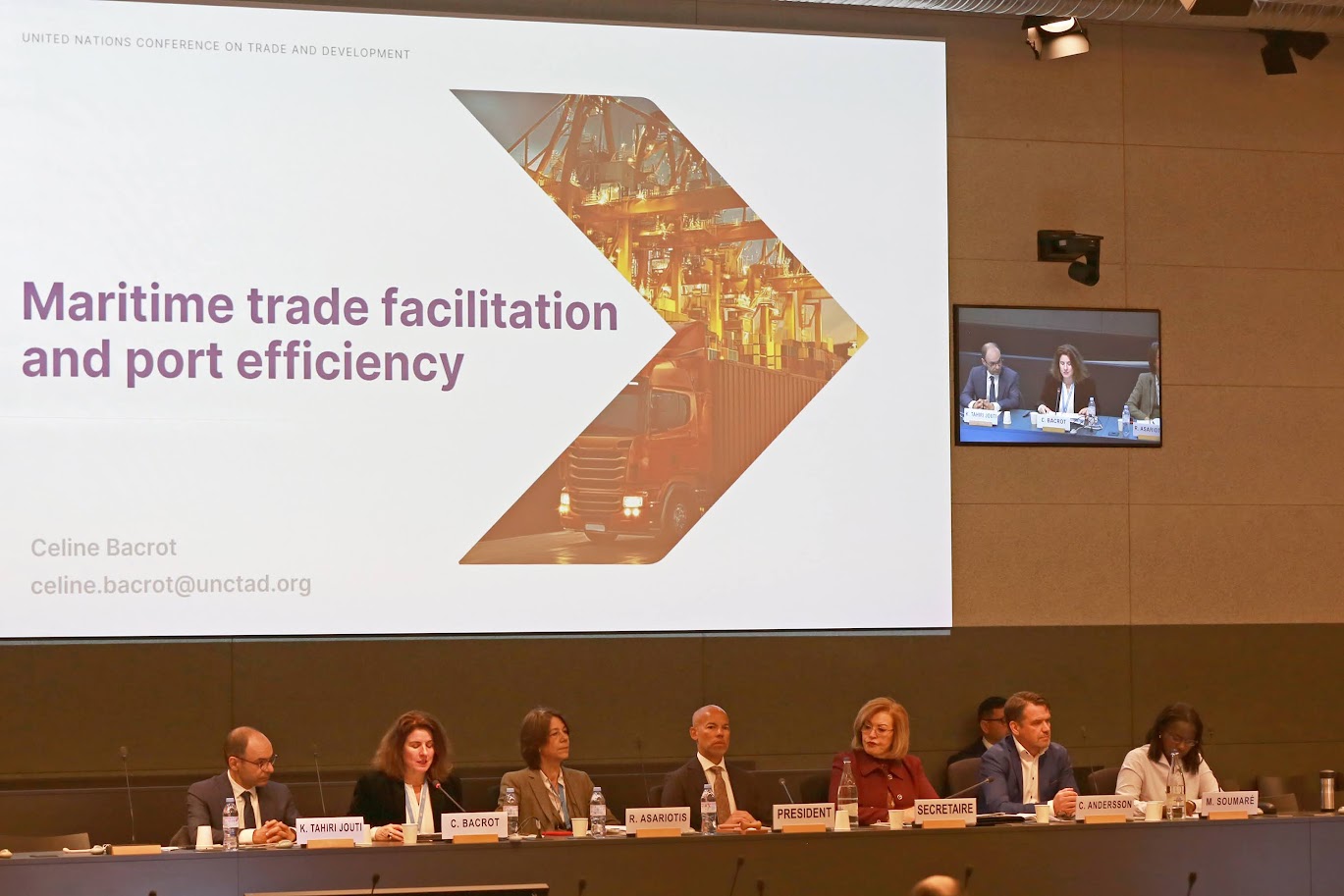
Geneva, 14 April 2026: The twelfth session of UN Trade and Development’s multi-year expert meeting on transport, trade logistics and trade facilitation brought together policymakers, international organizations and private sector stakeholders this week at the Palais des Nations to discuss pathways for strengthening resilience and sustainability in global trade. The session was moderated by the Ambassador of the Dominican Republic and featured contributions from UN Trade and Development’s Trade Facilitation Section, the ASYCUDA Programme, the International Labour Organization, the United Nations Commission on International Trade Law, the Global Alliance for Trade Facilitation, and the private sector, including A.P. Møller–Maersk (MAERSK), reflecting a broad, multi-stakeholder dialogue.
Against this backdrop, the ASYCUDA Programme presented ASYHUB Maritime, highlighting its potential use as a Maritime Single Window to support more efficient and coordinated port operations. The discussion emphasized the critical role of digitalization in addressing persistent inefficiencies in maritime trade, including fragmented reporting systems, duplication of procedures and limited inter-agency coordination. Contributions from UNCTAD’Trade Facilitation Section highlighted how trade facilitation measures, supported by digital infrastructure such as trade and maritime single windows, play a pivotal role in improving port performance, enhancing connectivity and strengthening collaboration across border agencies.
ASYHUB Maritime was introduced as a single-entry digital platform for ship reporting formalities, enabling standardized data exchange between customs, port authorities, immigration services and other stakeholders. It is a system that users can securely access and log in to, while also serving as a cutting-edge interface for trade data exchange and centralization. Built on interoperable, standards-based technologies, the platform facilitates the extraction and processing of data from multiple sources, including shipping lines, logistics providers and freight forwarders, transforming often fragmented and duplicated information into actionable data. By supporting real-time information sharing across the maritime ecosystem, the platform contributes to faster vessel clearance, improved risk management and greater transparency.
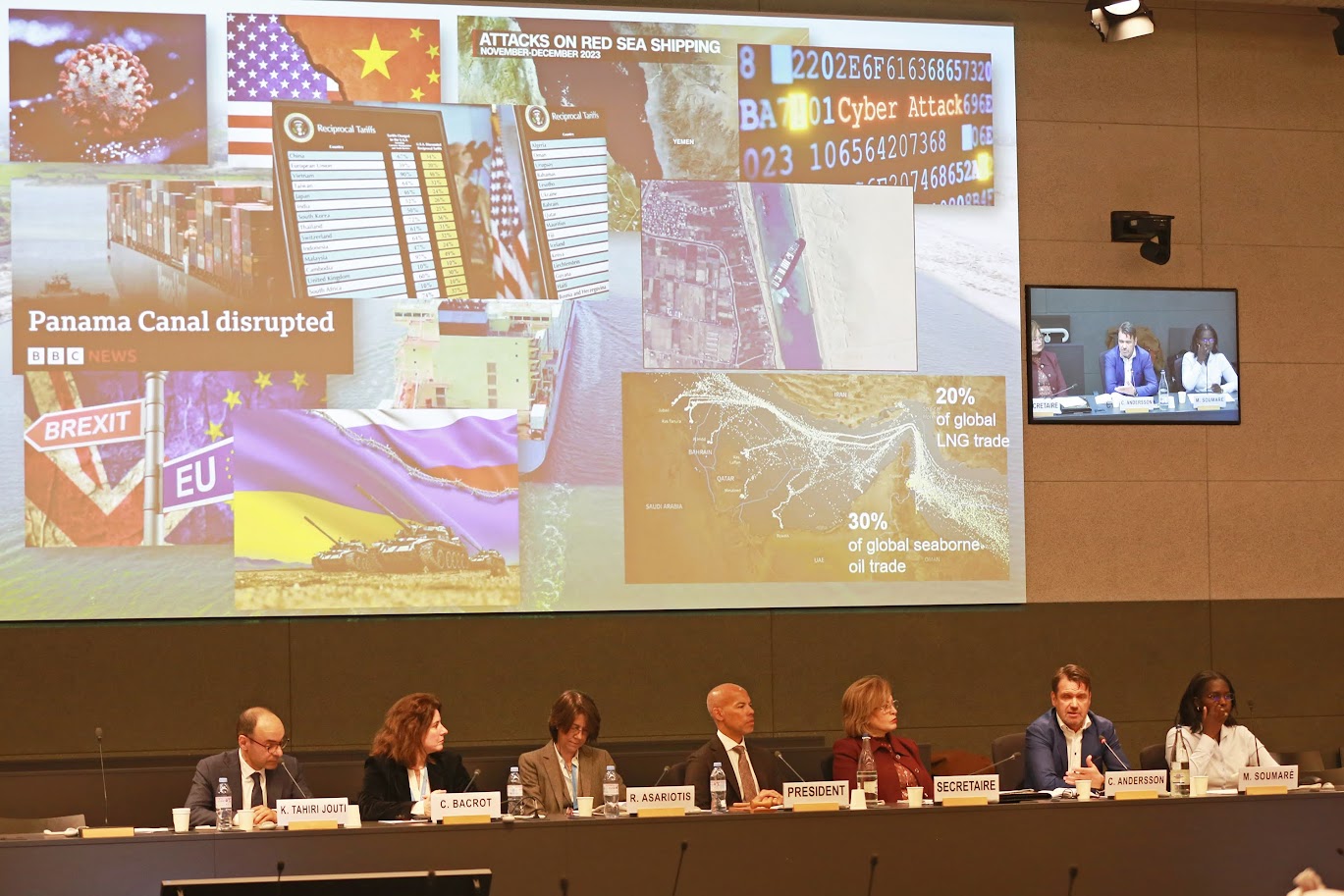
The presentation also highlighted that ASYHUB Maritime is the result of a unique tripartite collaboration between UNCTAD, the German development agency Deutsche Gesellschaft für Internationale Zusammenarbeit (GIZ), and the private sector, notably MAERSK. Developed with financial support from GIZ and drawing on the operational expertise and industry experience of Maersk, the platform reflects a model that combines development cooperation, public sector mandate and private sector know-how. Contributions from Maersk further emphasized the importance of digital trade corridors, end-to-end data integration and “smart border” concepts in mitigating disruptions and improving the resilience of global supply chains.
The presentation generated strong engagement from participants, with representatives from international organizations, governments and the private sector collectively recognizing and praising the relevance and practical benefits of ASYHUB Maritime for the maritime community. Country experiences shared during the session highlighted the implementation of ASYHUB Maritime in Venezuela, as well as upcoming deployment in Trinidad and Tobago, demonstrating its adaptability across different operational environments. In the Middle East, implementation in Jordan was noted for its broader regional impact, supporting trade facilitation beyond national borders.
Discussions also underscored the relevance of such solutions for Small Island Developing States (SIDS), where structural constraints in port infrastructure and connectivity remain significant. Participants indicated interest in further technical exchanges to explore the application of ASYHUB Maritime in these contexts.
Questions raised during the session focused on implementation modalities, costs and technical feasibility. The ASYCUDA Programme emphasized its demand-driven and cost-efficient model, with projects typically financed by beneficiary countries as strategic investments. Flexible deployment options, including cloud-based and regional hosting solutions, were highlighted as key enablers for countries facing technical or infrastructural constraints.
As global supply chains become more complex, the discussions reinforced the need for interoperable, digital-first solutions. ASYHUB Maritime offers a practical approach to modernizing port operations, strengthening inter-agency coordination and enhancing the resilience of international trade systems.