


News

ASYCUDA and CPLP Sign MoU to Strengthen Trade Digitalization Cooperation
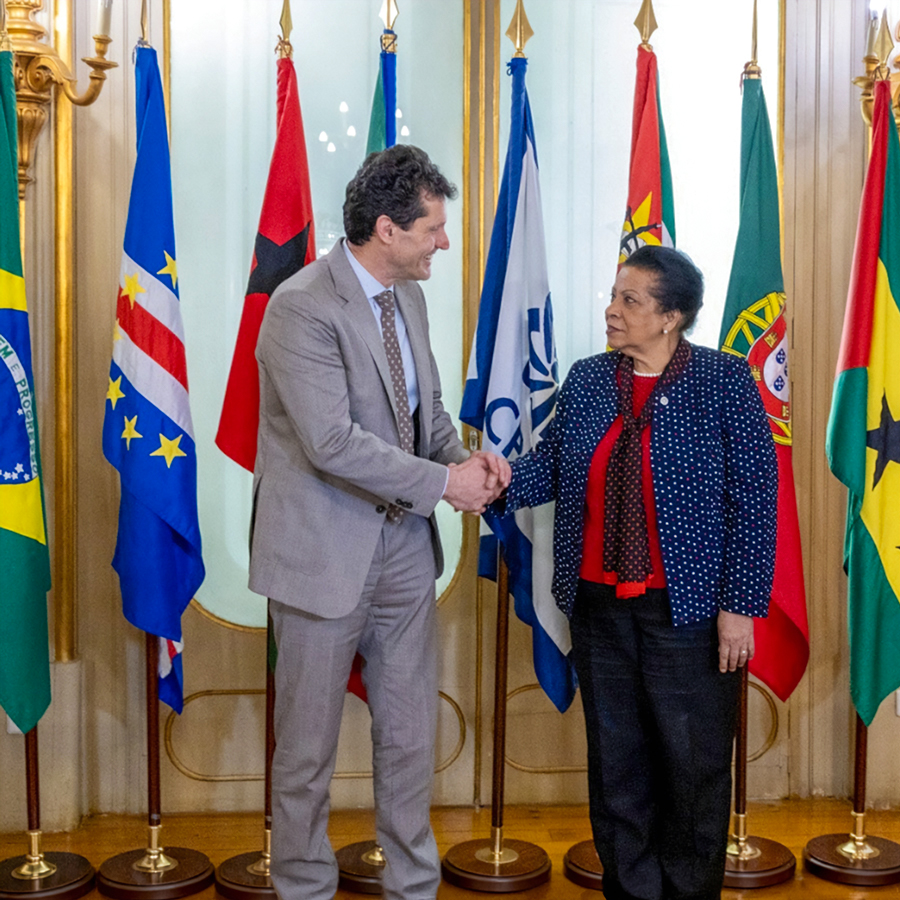
Lisbon, 24 February 2026: The ASYCUDA Programme and the Community of Portuguese Language Countries (CPLP) signed a Memorandum of Understanding (MoU) at CPLP headquarters in Lisbon to strengthen cooperation in customs modernization, trade digitalization and institutional capacity development.
The agreement builds on collaboration initiated in 2000 and establishes a renewed framework for cooperation in support of customs reform, automation and knowledge exchange across Portuguese-speaking countries. The partnership promotes digital solutions for international trade, including the progressive integration of artificial intelligence and machine learning tools to enhance risk management, compliance and data-driven decision-making.
Several CPLP member States are long-standing users of ASYCUDA systems and continue to advance national customs reforms through tailored digital solutions.
In Angola, customs authorities recently operationalized ASY5, the fifth generation of ASYCUDA customs management software. The adoption of this next-generation platform represents a transformative milestone for the country’s customs administration, positioning Angola among the first globally to deploy the new architecture. The upgrade strengthens system performance, scalability and security, and lays the foundation for advanced analytics, enhanced risk profiling and fully digital end-to-end processing in a high-volume trade environment.
Cabo Verde has adopted ASYVAL to strengthen customs valuation controls, enhance trade integrity and support revenue mobilization efforts.
Equatorial Guinea has completed the nationwide rollout of ASYCUDAWorld, consolidating digital customs procedures across the country, while Guinea-Bissau has also deployed ASYCUDAWorld to reinforce customs digitalization and operational efficiency.
In Mozambique, eCITES v2 went live in October 2022, introducing strengthened ICT infrastructure, an electronic tax payment module and an interface enabling cross-border electronic exchange of CITES permits, with full Portuguese-language integration.
São Tomé and Príncipe continues to leverage ASYCUDA systems to improve customs efficiency and compliance, and in Timor-Leste, electronic Single Window capabilities are expanding inter-agency coordination and streamlining trade procedures.
While Brazil and Portugal operate their own nationally developed customs systems, the MoU opens space for strengthened dialogue, technical exchange and potential areas of mutual cooperation within the Lusophone community, including the sharing of expertise and innovative digital practices.
The renewed cooperation between ASYCUDA and CPLP reflects a shared commitment to advancing digital transformation in customs administrations and supporting more efficient, transparent and resilient trade systems across CPLP member States.
Read more : CPLP and UNCTAD strengthen capacities focused on digitization of international trade
Lisbon, 24 February 2026: The ASYCUDA Programme and the Community of Portuguese Language Countries (CPLP) signed a Memorandum of Understanding (MoU) at CPLP headquarters in Lisbon to strengthen cooperation in customs modernization, trade digitalization and institutional capacity development.
The agreement builds on collaboration initiated in 2000 and establishes a renewed framework for cooperation in support of customs reform, automation and knowledge exchange across Portuguese-speaking countries. The partnership promotes digital solutions for international trade, including the progressive integration of artificial intelligence and machine learning tools to enhance risk management, compliance and data-driven decision-making.
Several CPLP member States are long-standing users of ASYCUDA systems and continue to advance national customs reforms through tailored digital solutions.
In Angola, customs authorities recently operationalized ASY5, the fifth generation of ASYCUDA customs management software. The adoption of this next-generation platform represents a transformative milestone for the country’s customs administration, positioning Angola among the first globally to deploy the new architecture. The upgrade strengthens system performance, scalability and security, and lays the foundation for advanced analytics, enhanced risk profiling and fully digital end-to-end processing in a high-volume trade environment.
Cabo Verde has adopted ASYVAL to strengthen customs valuation controls, enhance trade integrity and support revenue mobilization efforts.
Equatorial Guinea has completed the nationwide rollout of ASYCUDAWorld, consolidating digital customs procedures across the country, while Guinea-Bissau has also deployed ASYCUDAWorld to reinforce customs digitalization and operational efficiency.
In Mozambique, eCITES v2 went live in October 2022, introducing strengthened ICT infrastructure, an electronic tax payment module and an interface enabling cross-border electronic exchange of CITES permits, with full Portuguese-language integration.
São Tomé and Príncipe continues to leverage ASYCUDA systems to improve customs efficiency and compliance, and in Timor-Leste, electronic Single Window capabilities are expanding inter-agency coordination and streamlining trade procedures.
While Brazil and Portugal operate their own nationally developed customs systems, the MoU opens space for strengthened dialogue, technical exchange and potential areas of mutual cooperation within the Lusophone community, including the sharing of expertise and innovative digital practices.
The renewed cooperation between ASYCUDA and CPLP reflects a shared commitment to advancing digital transformation in customs administrations and supporting more efficient, transparent and resilient trade systems across CPLP member States.
Read more : CPLP and UNCTAD strengthen capacities focused on digitization of international trade